

What Happens During a Pediatric Dental Cleaning?
A Parent's Complete Guide to Their Child's First, and Every, Dental Visit
As a parent, it's completely natural to wonder what actually happens behind that little dental chair during your child's cleaning appointment. You want to make sure your child feels safe, and you want to know what to expect before you walk through the door, not after.
If your child has an upcoming pediatric dental cleaning, or you're preparing for their very first kids dental exam, this guide is for you. We'll walk you through each step of a typical children's teeth cleaning visit, explain what the dentist is looking for, and share how you can help your child feel comfortable from start to finish.
No scary surprises. Just helpful, honest information to put both of you at ease.
Why Regular Pediatric Dental Cleanings Matter More Than You Think
You might be wondering: do baby teeth really need professional cleanings? The short answer is yes, and it matters more than most parents realize.
Early attention to your child's oral health can make a big difference down the road. Regular pediatric dental cleanings help remove plaque and tartar buildup that brushing at home simply can't reach. More importantly, they allow your child's dental team to catch small concerns early, before they become bigger, more complicated issues.
Many children experience early signs of tooth decay, gum sensitivity, or crowding issues without any obvious symptoms. A routine cleaning combined with a kids dental exam gives the dentist the chance to spot these things early, when treatment is simpler and less stressful for your child.
Beyond prevention, these visits also help build a healthy relationship between your child and dental care, which is one of the most valuable gifts you can give their long-term health.
Signs Your Child May Be Due for a Dental Cleaning
Most pediatric dentists recommend cleanings every six months, but there are a few signs that your child may need to be seen sooner:
- Visible discoloration or dark spots on the teeth
- Complaints of tooth sensitivity, especially to cold or sweet foods
- Bleeding gums when brushing, even mild or occasional
- Bad breath that doesn't go away after brushing
- White spots on the teeth, which can be early signs of enamel changes
- Your child hasn't had a cleaning in over six months
- It's their first dental visit and they're around age one, or their first tooth has appeared
If you notice one or more of these, it's a good idea to schedule a visit with a pediatric dentist. And if everything looks fine? That's great news, but a routine cleaning is still worth keeping up with.
When Should You Schedule Your Child's First Dental Cleaning?
The American Academy of Pediatric Dentistry recommends that children have their first dental visit by age one, or within six months of their first tooth appearing, whichever comes first. This might feel early, but the goal isn't to do a full cleaning right away. It's to introduce your child to the dental environment in a relaxed, positive way.
By age two or three, most children are ready for their first real children's teeth cleaning. At this point, a gentle cleaning with a soft tool can be done comfortably, and the dentist can begin monitoring how the teeth are developing.
Every child is different, though. Some kids may need earlier evaluations, especially if you've noticed signs of decay, crowding, or thumb-sucking habits that may be affecting tooth alignment. A pediatric dentist can assess your child's unique needs and guide you on timing that makes sense for them specifically.
What Happens During a Pediatric Dental Cleaning? (Step by Step)
This is the part most parents are most curious about. Knowing what to expect can help both you and your child feel more comfortable going in. Here's what a typical visit looks like:
Step 1: A Warm Welcome and Getting Comfortable
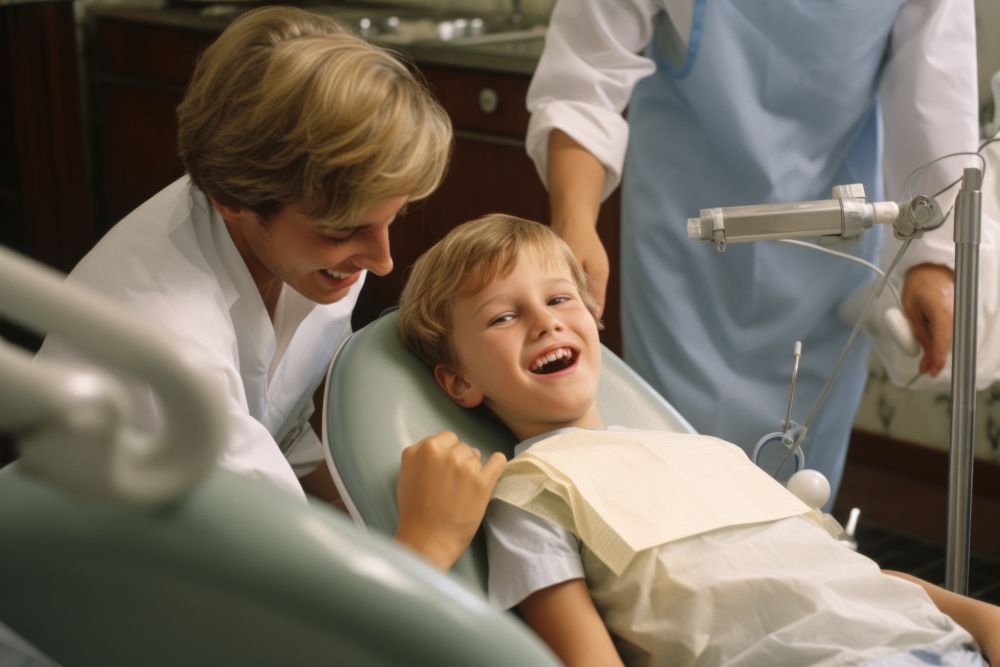
Pediatric dental offices are designed with kids in mind. Your child will likely see colorful décor, child-friendly chairs, and staff who are trained to speak gently and patiently with young patients. The first few minutes are usually spent helping your child feel at ease, sometimes with a quick tour of the tools, explained in simple, friendly language.
Step 2: The Gentle Cleaning
The hygienist will use a small, soft tool to gently remove plaque and tartar from the surfaces of your child's teeth, including along the gumline, where buildup tends to hide. For younger children, this is kept very brief and gentle. Older children may have a more thorough cleaning that includes polishing with a mildly gritty toothpaste that leaves teeth smooth and clean.
Many kids actually enjoy the "tickly" feeling of the polishing tool. The flavor of the polishing paste (usually bubblegum, watermelon, or mint) is often a highlight for little ones!
Step 3: Flossing
Once the teeth are clean, the hygienist will gently floss between each tooth. This removes debris from areas that brushing can't reach. If your child isn't used to flossing at home, this part may feel a little unusual, but it should never be painful. The hygienist may also offer tips on how to make flossing easier at home.
Step 4: Fluoride Treatment (If Recommended)
After cleaning, many children receive a fluoride treatment, a quick application of a gel or foam that strengthens tooth enamel and helps protect against cavities. It only takes about a minute, and your child will be asked to avoid eating or drinking for about 30 minutes afterward to let it absorb.
Fluoride is safe and highly effective for children. If you have questions about whether it's right for your child, don't hesitate to ask, the dental team is always happy to explain.
Step 5: The Kids Dental Exam
After the cleaning, the pediatric dentist will perform a full kids dental exam. This includes checking each tooth for signs of decay, examining the gums, evaluating jaw development, and assessing how the teeth are growing in. For older children, X-rays may be taken every one to two years to get a clearer picture of what's happening beneath the surface.
The dentist will share their findings with you at the end of the visit and let you know if any follow-up care is needed. If everything looks good, they'll simply schedule your next six-month visit.
How You Can Help Your Child Before, During, and After the Visit
Your involvement makes a bigger difference than you might think. Here are some simple ways to set your child up for a positive experience:
- Talk about it positively before the appointment, avoid words like "pain," "shot," or "hurt," even to reassure them
- Read a children's book about going to the dentist in the days leading up to the visit
- Let your child bring a comfort item, a stuffed animal or favorite toy is always welcome
- Brush and floss at home consistently so their mouth is used to being cleaned
- Praise and celebrate after the visit, no matter how it goes, even small steps deserve recognition
- Keep your own attitude calm and positive; children pick up on parental anxiety quickly
- Maintain regular six-month visits so dental care becomes a normal, expected routine, not a special or scary event
Frequently Asked Questions About Pediatric Dental Cleanings
At what age should a child have their first dental cleaning?
Most children are ready for their first children's teeth cleaning around age two to three. However, the first dental visit should happen by age one or when the first tooth appears, whichever comes first. That early visit focuses more on getting comfortable and giving parents guidance on home care.
Is a pediatric dental cleaning painful?
For the vast majority of children, dental cleaning is not painful at all. The tools used are gentle, and the hygienist will always go at your child's pace. If your child has sensitive gums or significant buildup, there may be mild discomfort, but the team will do everything they can to make the experience as comfortable as possible.
How long does a pediatric dental cleaning take?
A typical appointment, including the cleaning and the kids dental exam, usually takes between 45 minutes and an hour for most children. First visits may be shorter. If X-rays are included or additional concerns are identified, it may run a little longer.
Does my child need X-rays at every visit?
No. X-rays are not taken at every visit. Most pediatric dentists recommend dental X-rays every one to two years, depending on your child's individual risk level for cavities and how their teeth are developing. The dentist will let you know when X-rays are appropriate.
What if my child is nervous or refuses to cooperate?
Pediatric dentists are specially trained to work with anxious or hesitant children. They use calm communication, distraction techniques, and child-friendly language to help little patients feel safe. If your child struggles, the team will never force anything, they'll work with you to find the best approach, which may include a shorter introductory visit before attempting a full cleaning.
Your Child's Smile Is Worth Protecting
Understanding what happens during a pediatric dental cleaning can take a lot of the mystery, and worry, out of the experience. From the gentle cleaning and polishing to the thorough kids dental exam at the end, every step is designed with your child's comfort and health in mind.
Regular children's teeth cleaning appointments are one of the simplest, most effective things you can do to protect your child's oral health now and in the years ahead. And the earlier you start building that positive routine, the better.
If you have questions before your child's visit, or if you're ready to schedule their first pediatric dental cleaning, the team at Soft Breeze Children's Dentistry is here to help. We'd love to make your child's dental experience one they feel good about, every single time.
Related Posts
.jpg)
Can Kids Get Gum Disease? What Parents Should Know
What Parents Should Know About Kids' Wisdom Teeth

Signs Your Child Might Need Braces Earlier Than Expected!
