
What Causes Bad Breath in Kids and How to Fix It?
As a parent, noticing that your child has bad breath can catch you off guard, especially if they seem to brush their teeth every day without complaint. You might find yourself wondering whether it's something you're doing wrong, whether it's a sign of a health problem, or whether it's just a phase that will pass on its own.
The good news is that bad breath in kids is far more common than most parents realize, and in the majority of cases, it has a simple, fixable cause. But knowing what you're dealing with makes all the difference.
In this guide, we'll walk you through the most common causes of halitosis in children, the signs that might point to something worth checking out, and practical steps you can take at home to help your child feel fresh and confident every day.
Why Bad Breath in Kids Deserves Attention
Early attention to bad breath in kids can make a bigger difference than you might expect. While it's easy to brush it off as a normal childhood thing, persistent bad breath is often a signal that something in your child's oral routine, or health, needs a little support.
The mouth is a busy ecosystem. Bacteria live on the teeth, gums, and tongue, and when they break down food particles and dead cells, they release sulfur compounds that cause that familiar unpleasant odor. In children, the balance of this ecosystem is especially sensitive to habits, hydration, and oral hygiene.
Many children experience occasional bad breath, first thing in the morning, after certain foods, or when they're fighting a cold. That's completely normal. But when the smell is persistent, strong, or doesn't improve with brushing, it's worth understanding the causes of bad breath more closely. Addressing it early helps prevent it from becoming a source of self-consciousness as your child grows and becomes more aware of social situations.
Signs That Something More May Be Going On
Most of the time, bad breath in kids is mild and easily managed. But there are signs that suggest it's worth a closer look from your pediatric dentist:
- Persistent bad breath that doesn't improve after brushing, If the smell returns quickly and consistently, brushing alone isn't reaching the source
- White coating on the tongue, A buildup of bacteria and debris on the tongue is one of the most common overlooked causes of halitosis in children
- Dry or cracked lips and a constantly open mouth, A sign your child may be a habitual mouth breather, which significantly dries out the mouth and worsens odor
- Swollen or bleeding gums, Can indicate early gum disease, which carries its own distinct odor
- A sweet or fruity smell, Unusual in a child who hasn't just eaten fruit; worth mentioning to a doctor
- Complaints of a bad taste in the mouth, Children sometimes notice this before parents notice the smell
- Snoring or disrupted sleep, Often connected to mouth breathing and nasal congestion, both of which affect breath quality
If one or more of these feel familiar, a visit to your pediatric dentist is a great first step.
What Actually Causes Bad Breath in Kids?
Understanding the causes of bad breath helps you tackle the right problem, not just the symptom. Here are the most common culprits:
- Poor oral hygiene, Incomplete brushing and skipping flossing leaves food particles and bacteria behind on teeth, gums, and between teeth where odor builds quickly
- A dirty tongue, The tongue's surface is textured and traps bacteria easily; most children never brush their tongue, yet it's often the primary source of bad breath
- Dry mouth, Saliva is the mouth's natural cleansing system. When children are dehydrated, breathe through their mouths, or sleep with their mouth open, saliva production drops and bacteria thrive
- Food choices, Strong-smelling foods like onions, garlic, and certain cheeses release odor compounds that linger in the breath for hours after eating
- Cavities or tooth decay, Decay creates spaces where bacteria accumulate and produce a distinct, unpleasant odor that brushing won't resolve
- Gum disease (gingivitis), Even mild gum inflammation in children can produce noticeable odor; it's more common in kids than many parents realize
- Mouth breathing, Whether caused by allergies, enlarged tonsils, or habit, breathing through the mouth dries it out and creates an ideal environment for odor-causing bacteria
- Tonsil stones, Small accumulations of bacteria and debris that form in the crevices of the tonsils; common in school-age children and a frequently overlooked source of persistent bad breath
- Sinus infections or post-nasal drip, Mucus draining into the back of the throat feeds bacteria and carries its own odor, often making breath smell different from typical oral causes
Knowing which of these applies to your child helps you figure out whether a home fix or a professional visit is the right next step.
When Should You Talk to a Dentist or Doctor?
Every child has morning breath, and the occasional food-related odor is completely normal. But most experts recommend bringing it up with your pediatric dentist if bad breath in your child has been going on for more than a few weeks despite regular brushing, or if it's accompanied by any of the signs listed above.
Earlier evaluation is especially worth considering if your child has visible signs of tooth decay, if they breathe through their mouth regularly, or if they frequently complain of a sore throat or bad taste. These details help your dentist or doctor quickly identify whether the source is dental, related to the tonsils or sinuses, or connected to another health factor.
A pediatric dentist can also help rule out gum disease or hidden cavities, both of which are common causes of persistent halitosis in children that don't respond to better brushing alone.
What to Expect at a Dental Visit for Bad Breath
There's no reason to feel embarrassed bringing up bad breath at a dental appointment, pediatric dentists hear this concern regularly, and it's a completely valid reason to schedule a visit. Here's what typically happens:
- A full oral exam, The dentist checks for cavities, signs of gum disease, plaque buildup on the tongue, and any visible dental issues that could be contributing to the smell
- Questions about habits and symptoms, Mouth breathing, sleep patterns, diet, and hydration all give useful clues
- A professional cleaning, Removes hardened plaque and tartar that home brushing can't reach, which often makes an immediate difference in breath quality
- Guidance tailored to your child, Whether the recommendation is a tongue scraper, improved flossing habits, more water, or a referral to an ENT for tonsil concerns, you'll leave with a clear, specific plan
The visit is gentle, straightforward, and usually a relief, both for you and your child.
How Parents Can Help at Home
Oral hygiene for kids is the foundation of fresh breath, and small improvements to the daily routine can make a noticeable difference quickly. Here's what to focus on at home:
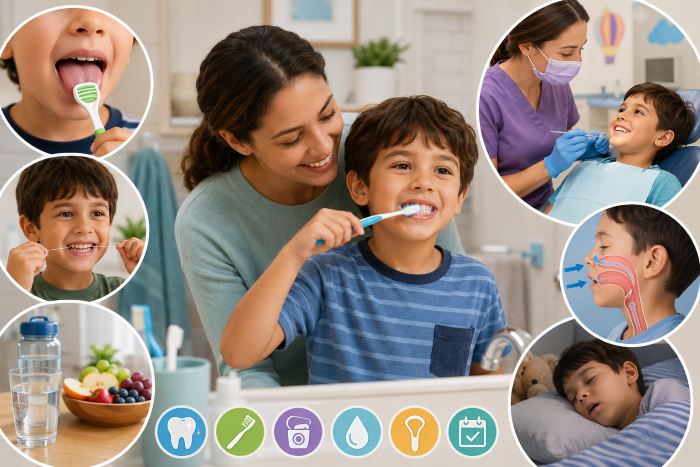
- Add tongue brushing to the routine, Use a soft toothbrush or a child-friendly tongue scraper to gently clean the tongue every time your child brushes. This one step alone can dramatically reduce bad breath.
- Make sure brushing is thorough, Two full minutes, twice a day, covering all surfaces of each tooth. Many children rush through brushing; a timer or a two-minute song helps.
- Introduce flossing early, Food trapped between teeth is a major source of odor. Daily flossing, even for young children with adult help, removes what brushing misses.
- Prioritize water throughout the day, Staying hydrated keeps saliva flowing, which naturally rinses the mouth and controls bacterial growth. Limit juice and flavored drinks that reduce saliva production.
- Watch for mouth breathing, If your child regularly sleeps with their mouth open or breathes through their mouth during the day, mention it at your next dental visit. It may be connected to allergies or adenoid issues that are treatable.
- Keep regular dental checkups, Every six months gives your dentist the chance to catch cavities, tartar buildup, or early gum issues before they become bigger odor problems.
- Stay calm and positive, Children can feel self-conscious about bad breath once they become aware of it. Approaching it as a normal, fixable health matter, rather than something embarrassing, helps them engage with the solution rather than shut down.
Frequently Asked Questions
Is bad breath in kids normal?
Occasional bad breath is completely normal, especially in the morning, after certain foods, or during a cold. What's worth paying attention to is bad breath that persists throughout the day, doesn't improve with brushing, or is accompanied by other symptoms like swollen gums, visible decay, or chronic mouth breathing. Persistent halitosis in children usually has a clear cause and a clear fix.
What is the most common cause of bad breath in children?
The most common causes are poor tongue hygiene, incomplete brushing, dry mouth, and cavities. The tongue is the most frequently overlooked factor, it harbors a significant portion of the bacteria responsible for odor, and most children (and many adults) never clean it. Adding tongue brushing to the daily routine is often the single most effective change a family can make.
Can tonsils cause bad breath in kids?
Yes, tonsil stones are a surprisingly common and often unrecognized cause of persistent bad breath in school-age children. They form when food particles, bacteria, and dead cells accumulate in the pockets of the tonsils and calcify. Children with large or frequently inflamed tonsils are more prone to them. If your child has persistent bad breath that doesn't respond to improved oral hygiene for kids, tonsils are worth mentioning to your dentist or pediatrician.
Does diet affect my child's breath beyond obvious foods like garlic?
Absolutely. Beyond strong-smelling foods, a high-sugar diet feeds the bacteria that produce odor. Frequent snacking without drinking water in between keeps acid and bacterial activity elevated all day. Dehydration, even mild, significantly reduces saliva and worsens breath. Shifting toward more water, whole foods, and structured meal times supports fresher breath alongside better overall dental health.
When should I be concerned about my child's bad breath?
Bring it up at your next dental visit if the bad breath is persistent, strong, or accompanied by other symptoms like bleeding gums, visible tooth discoloration, difficulty breathing through the nose, or complaints of a sore throat or bad taste. These details help pinpoint the cause quickly. Most of the time the answer is reassuringly simple, but it's always better to check.
Fresh Breath Starts With Small, Consistent Habits
Bad breath in kids is one of those concerns that can feel awkward to talk about but is almost always fixable once you understand what's behind it. Whether it comes down to a tongue that needs brushing, a cavity that needs treating, or a mouth-breathing habit worth investigating, there's a clear path forward for almost every child.
You don't have to figure it out alone. If your child's breath has been a persistent concern, a visit with a pediatric dentist is the quickest way to get a clear answer and a practical plan, without any guesswork.
A little attention to oral hygiene for kids today builds the habits and the confidence that will serve your child for life.
At Soft Breeze Children's Dentistry, no concern is too small to bring up. Schedule your child's visit todalet's get to the bottom of it together, fresh breath and all.
Related Posts
.jpg)
Can Kids Get Gum Disease? What Parents Should Know

What Parents Should Know About Kids' Wisdom Teeth

Signs Your Child Might Need Braces Earlier Than Expected!
