
Trusted Children's Dentistry in Newport Beach for Healthy Smiles!
As a parent, it's natural to wonder whether your child's teeth are developing the way they should, and whether you're doing everything possible to protect their smile. You want to make the best decisions for your child's health, but knowing when to step in, what warning signs to watch for, and how to choose the right care isn't always clear.
In this guide, we'll walk you through what to expect from quality children's dentistry in Newport Beach, how to know when your child may need attention, and simple steps you can take at home to set the foundation for a lifetime of healthy smiles.
Why Children's Preventive Dentistry Matters
Early attention to your child's oral health can make a bigger difference than most parents realize. The habits, treatments, and check-ups your child receives in their early years lay the groundwork for a healthy adult smile, and can prevent far more complex (and costly) issues down the road.
Many parents assume that because baby teeth fall out anyway, they don't require much attention. But baby teeth hold space for permanent teeth, support speech development, and affect how your child chews and eats every day. Cavities, misalignment, and untreated problems in baby teeth can directly impact permanent teeth, and a child's confidence.
That's where preventive dentistry services come in. Regular cleanings, fluoride treatments, dental sealants, and early evaluations are gentle, proactive tools designed to protect your child's smile before problems arise. Think of it less like reacting to problems and more like giving your child a head start.
Signs to Watch For at Home
You know your child best, and often, parents notice something isn't quite right before anyone else does. Here are some signs that your child may benefit from a check-up or consultation with a pediatric dentist:
- Tooth pain or sensitivity, especially when eating hot, cold, or sweet foods
- Visible white spots, dark spots, or holes on the surface of teeth (these can be early signs of decay)
- Gum swelling, redness, or bleeding when your child brushes their teeth
- Teeth that seem crowded, crooked, or spaced unevenly as new teeth come in
- Mouth breathing or snoring regularly, which can signal jaw or airway concerns
- Thumb-sucking or pacifier use continuing beyond age 3, which may affect tooth alignment
- Complaints about chewing or avoiding certain foods because of mouth discomfort
- A bad taste in the mouth that doesn't go away after brushing
If you notice one or more of these, it's a good idea to consult a pediatric dentist, even if you're not sure whether it's something serious. A quick evaluation can provide real peace of mind.
When Should You Schedule Your Child's First Visit?
Many parents are surprised to learn that the American Academy of Pediatric Dentistry recommends bringing your child to the dentist by their first birthday, or when their first tooth appears, whichever comes first.
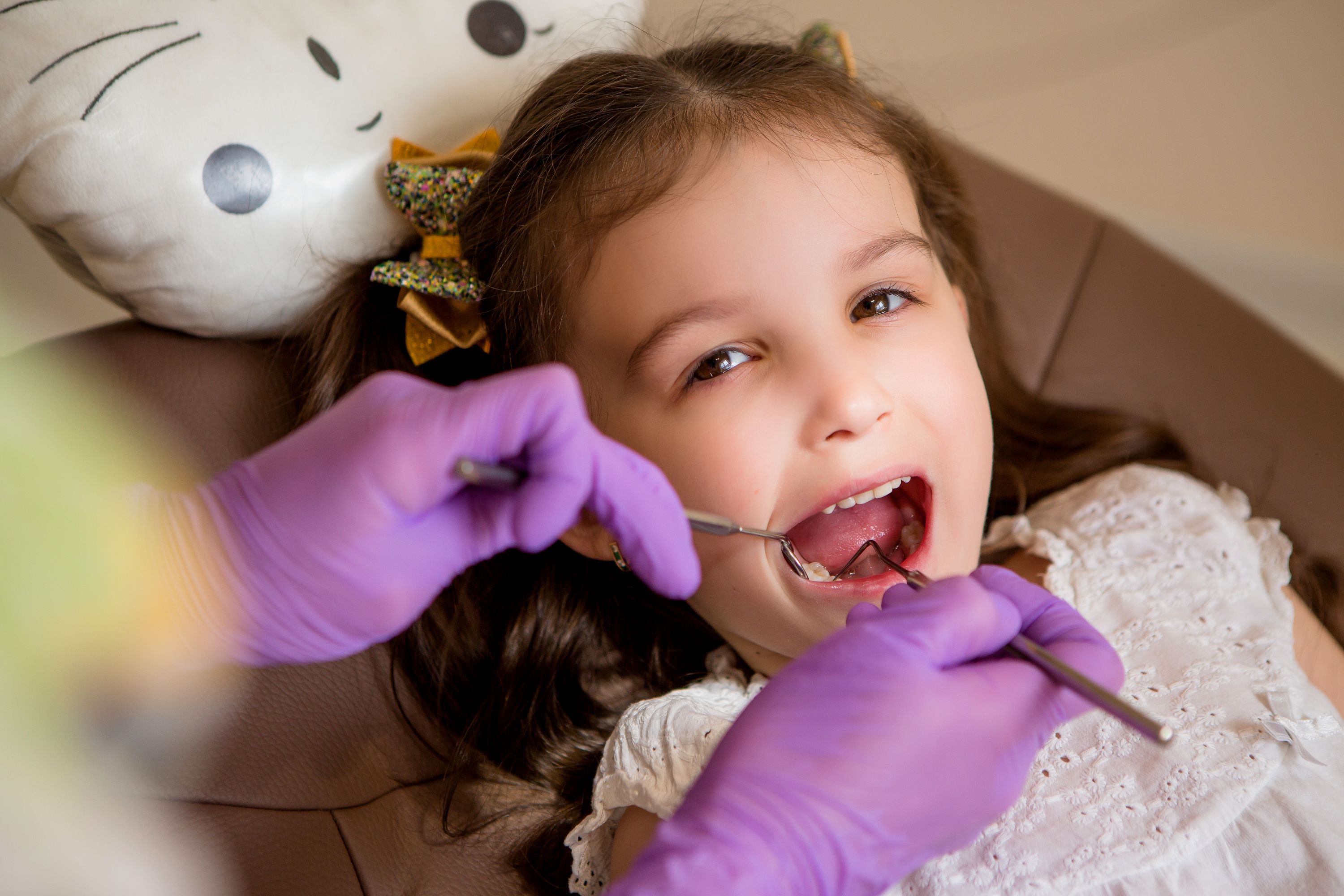
You might be thinking, "That feels really early." But the first visit isn't about a deep cleaning or complicated procedures. It's a gentle introduction: a chance for your child to meet their dentist, get comfortable in the chair, and for the dental team to spot any early concerns and guide you on home care routines.
After that first visit, most children benefit from check-ups every six months. These regular appointments allow the dental team to monitor your child's growth, catch anything early, and keep teeth clean between visits.
If your child is between 3 and 18 and hasn't had a recent check-up, it's never too late to get started. The sooner you establish a dental home for your child, the more confident and comfortable they'll feel at every visit going forward.
What to Expect During a Pediatric Dental Visit
If your child has never seen a dentist before, or had a not-so-great experience elsewhere, it's completely normal to feel a little uncertain about what to expect. Here's a peek at what a typical visit looks like:
- A warm, child-friendly welcome: The environment should feel calm, colorful, and designed with kids in mind. A good pediatric office knows that the waiting room and first impression matter.
- A gentle exam: The dentist will check your child's teeth, gums, bite, and jaw development. For young children, this is often brief and done in a way that feels more like a game than a procedure.
- Professional cleaning: A hygienist will carefully clean and polish your child's teeth, removing plaque buildup that regular brushing misses.
- Fluoride treatment or sealants if needed: These are quick, painless protective measures that can significantly reduce the risk of cavities.
- X-rays (when age-appropriate): Taken with low-dose digital technology to check for anything hiding between teeth or beneath the gumline.
- A conversation with you: A great pediatric dentist takes time to explain what they found, answer your questions, and give you specific, practical guidance for home care.
The goal is always to make the visit a positive memory, one your child leaves feeling proud of.
How Parents Can Help at Home
What happens between dental visits matters just as much as the appointments themselves. Here are a few simple but powerful ways you can support your child's oral health every day:
- Start brushing early. As soon as the first tooth appears, use a soft-bristled brush and a rice-sized amount of fluoride toothpaste. By age 3, move to a pea-sized amount.
- Brush twice a day, every day. Morning and before bed, and supervise until your child is around 7 or 8 years old to make sure they're reaching all the surfaces.
- Floss daily. As soon as two teeth touch, it's time to floss. Many kids (and adults!) skip this step, but it's where a lot of decay starts.
- Watch the snacks. Sugary drinks, sticky snacks, and frequent grazing throughout the day are a big contributor to cavities. Water is always the best between-meal drink.
- Keep a positive attitude. Children pick up on how we talk about the dentist. Using upbeat, calm language, even if you personally have dental anxiety, helps your child feel safe.
- Attend those six-month check-ups. Regular visits to a pediatric dentist are one of the most important things you can do for your child's long-term oral health.
Frequently Asked Questions
What age should a child first see a dentist?
The American Academy of Pediatric Dentistry recommends a child's first dental visit by their first birthday, or within six months of their first tooth erupting. Starting early helps establish healthy habits, allows the dentist to spot any concerns, and ensures your child grows up seeing dental visits as a normal, positive part of life.
Are cavities in baby teeth really a problem if they're going to fall out anyway?
Yes, and this is one of the most common misconceptions parents have. Baby teeth hold space for permanent teeth and play a major role in your child's ability to chew, speak, and smile confidently. Untreated cavities can spread, cause pain, and even affect the permanent teeth developing underneath. Early treatment is almost always simpler and less stressful than waiting.
How do I know if my child needs orthodontic evaluation?
Most children should have an orthodontic evaluation by age 7, according to the American Association of Orthodontists. This doesn't necessarily mean braces, it simply means a specialist can assess how the jaw and teeth are developing. Early interceptive orthodontics can guide growth in the right direction and reduce the need for more extensive treatment later.
My child is nervous about the dentist. What should I do?
Dental anxiety in children is very common, and a good pediatric dental team is trained to handle it with patience and care. Before the visit, use simple, positive language, avoid words like "hurt," "shot," or "drill." Let your child know the dentist's job is to help keep their smile strong. If anxiety is significant, ask the practice about options like gentle behavior guidance or pediatric sedation to make the visit more comfortable.
How often does my child need to see the dentist?
Most children benefit from a dental visit every six months. Some children with higher cavity risk or ongoing orthodontic concerns may be seen more frequently. Your pediatric dentist will recommend the schedule that best fits your child's individual needs.
Supporting Your Child's Smile, One Visit at a Time
Understanding what children's dentistry in Newport Beach can look like, and what it should feel like, helps you make confident, informed decisions for your child's health. Preventive dentistry services aren't just about clean teeth; they're about building a foundation of trust, confidence, and lifelong habits that will serve your child for decades.
Whether your little one is due for their first visit or it's simply been a while, early guidance from a compassionate pediatric dentist can make a lasting difference.
If you're ever unsure, scheduling an appointment is the best way to get clarity and peace of mind, while keeping your child's smile healthy and bright for years to come.
Related Posts

Phase 1 Orthodontics: Does Your 7-Year-Old Really Need Interceptive Braces?

When Should Your Baby First See a Dentist? (And Why Age 1 Matters)
What Parents Should Know About Nitrous Oxide in Dentistry
